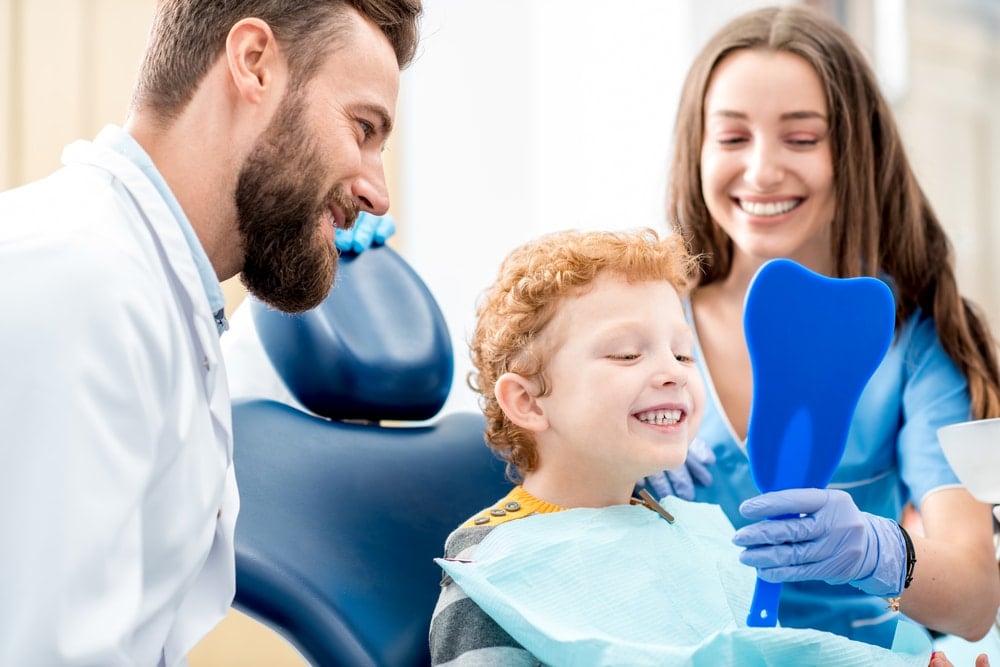
How to Prepare Your Child for Their First Dental Visit
A child’s first dental visit can feel unfamiliar for the whole family. A little preparation can make the day easier, but the goal isn’t to make your child perform perfectly. It is to help them know what is coming, give the dental team useful information, and start building a comfortable relationship with dental care.
The American Academy of Pediatric Dentistry recommends a first visit when the first tooth appears or no later than the first birthday. If your child is older and has not been seen yet, you can still start now. The dental team can meet your child where they are and adjust the visit to their age, development, and needs.
Learn more about what families can expect during a first dental visit
Table of Contents
Use Simple, Calm Language
Tell your child about the appointment in a short, matter-of-fact way. You might say, “We are going to meet the dental team and learn how to keep your teeth healthy.” For a young child, one or two sentences may be enough.
Try not to provide a long explanation or promise that nothing will feel uncomfortable. Children can become more worried when they hear unfamiliar details or when an adult promises that something “won’t hurt.” It also helps to avoid sharing your own difficult dental experiences before the visit.
The AAPD recommends simple, age-appropriate language and words that do not unnecessarily alarm children or families. Calm honesty gives the dental team room to explain each step in a way that fits your child.
Show Your Child What to Expect
Positive pictures can make a new setting feel more familiar. Look at the practice website together and show your child photos of the office or dental team. You can also read an age-appropriate book about visiting the dentist.
Keep the activity light. The goal is familiarity, not a detailed lesson about dental procedures. The AAPD identifies positive pre-visit images as one way to give children context and help them ask questions before care begins.
Practice for a Minute at Home
A short pretend visit can help your child practice a few basic steps. Take turns being the dentist and patient. Ask your child to sit back, open wide, and let you count their teeth with a clean finger.
Stop while the game is still fun. Repeated rehearsals or pressure can make the visit seem like a test. A brief practice gives your child a simple picture of what may happen without creating a promise about the exact appointment.
Choose a Time That Works for Your Child
When possible, request a time when your child is usually rested and comfortable. A tired or hungry child may have less patience with a new environment. Appointment options vary by office, so tell the scheduling team what time of day tends to work best for your family.
If your child has urgent pain, swelling, an injury, or another immediate concern, do not delay care to wait for an ideal appointment time. Tell the practice what is happening so the team can guide you to the appropriate next step.
Share Anything That Could Help the Dental Team
Before the visit, let the office know about your child’s medical conditions, medications, allergies, communication preferences, sensory needs, previous healthcare experiences, or specific fears. This information helps the team prepare and decide how to approach the appointment.
Parents should also bring any requested forms, insurance information, medication details, and a short list of questions. A familiar comfort item may help some younger children, but check with the office if you are unsure what to bring.
What Happens at a First Visit?
The exact visit depends on your child’s age, comfort, dental history, and clinical needs. Cali Kids Dental focuses on introducing children to the dental team and office in a comfortable, nonthreatening way, assessing oral development and dental conditions, and helping parents understand home care and what to expect as their child grows.
An examination, cleaning, fluoride treatment, or dental images may be considered when appropriate, but families should not assume every child will receive the same services at the first appointment. The dental team can explain what is recommended and why.
Learn more about pediatric dental care at Cali Kids Dental.
If Your Child Feels Nervous
Some hesitation, tears, or quiet behavior can be a normal response to a new place. It does not mean the visit failed. Avoid scolding or comparing your child with siblings. Let the dental team know what your child is feeling and allow them time to communicate.
After the appointment, praise something specific your child did, such as opening their mouth, answering a question, or meeting someone new. Specific praise helps the child recognize what went well and gives you something positive to build on next time.
Start With a Visit That Fits Your Family
Cali Kids Dental provides pediatric dental care for families in Antelope, Auburn, Folsom, and Orangevale. If your child is ready for a first visit, or if you have questions about preparing for the appointment, contact the location nearest you.
Frequently Asked Questions
When should my child first see a dentist?
The American Academy of Pediatric Dentistry recommends scheduling the first dental visit when the first tooth appears or no later than the child's first birthday.
What if my child is older and has never visited a dentist?
Schedule a visit now and tell the office that it will be your child's first appointment. Share any concerns or previous healthcare experiences so the team can plan an age-appropriate introduction.
What if my child is afraid of the dentist?
Tell the dental team before the appointment. Use calm, simple language at home, avoid frightening details, and do not treat tears or hesitation as misbehavior. The team can adjust communication and visit expectations to your child's needs.